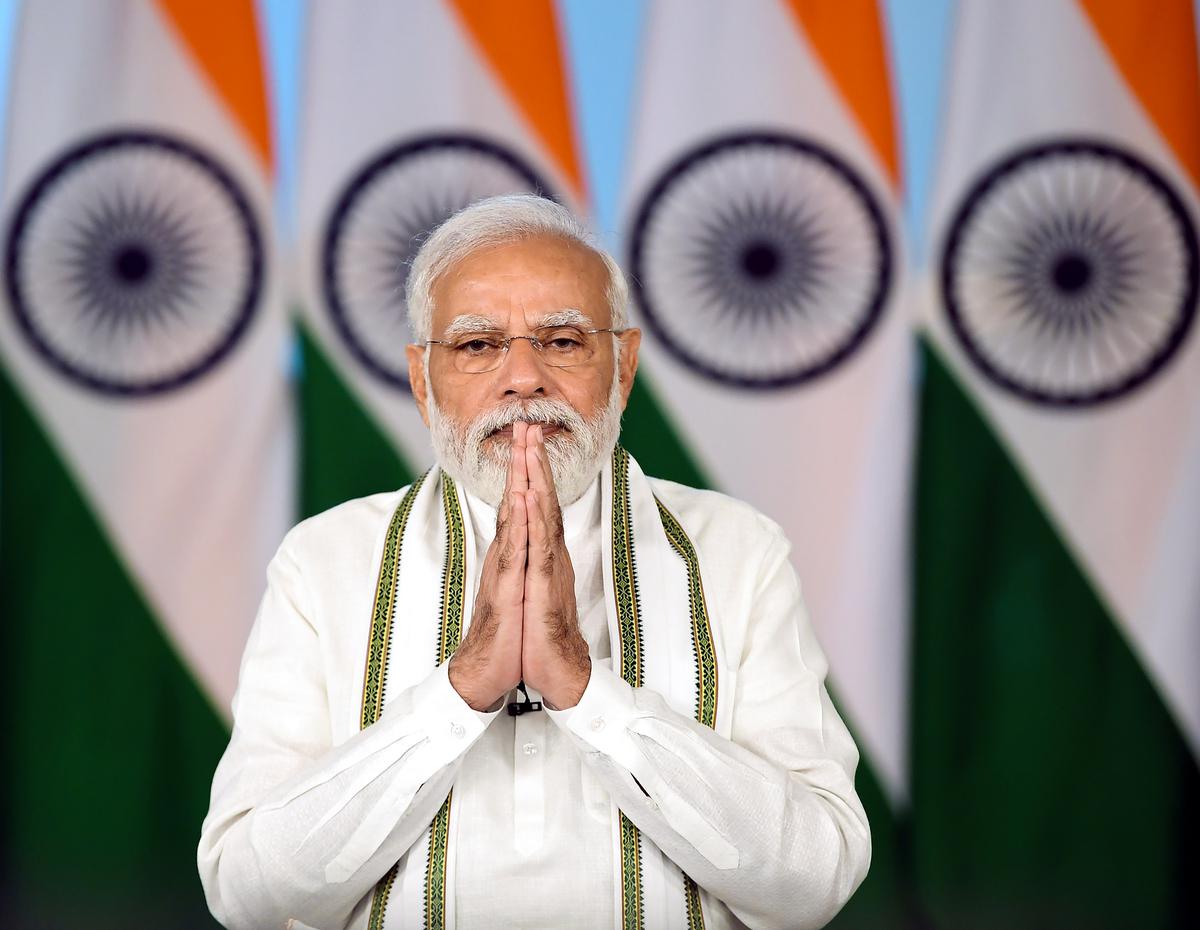
PM Modi unhappy with NCERT judiciary chapter has emerged as a significant development after the Supreme Court of India raised objections to references about corruption in the judiciary in a Class 8 textbook. The court has ordered a ban on the book and sought accountability from officials involved in its approval.
The controversy has triggered legal scrutiny, administrative review, and wider debate around curriculum oversight and judicial accountability in India.
What Happened
The row began when the Supreme Court took note of content in a Class 8 Social Science textbook published by National Council of Educational Research and Training (NCERT). The revised chapter, titled “The Role of the Judiciary in Our Society,” included references to corruption within the judicial system and statistical data on case pendency across courts.
A bench led by Chief Justice Surya Kant objected to the phrasing and issued a show-cause notice to the Secretary of School Education and the Director of NCERT. The court asked why action should not be initiated under the Contempt of Court Act or other applicable laws.
In a significant interim order, the bench directed a ban on the textbook’s circulation in India and abroad and ordered the seizure of printed copies. It also prohibited digital sharing of the material until further hearing.
Government sources indicated that PM Modi unhappy with NCERT judiciary chapter had sought clarity on how the content was approved, raising questions about oversight and accountability within the textbook content approval process NCERT follows.
Direct Answer: Why Was the Book Banned?
The Supreme Court objected to references about corruption in the judiciary in an NCERT Class 8 textbook, stating that the language required scrutiny. It issued notices to officials, ordered seizure of copies, and temporarily banned distribution pending further examination.
Background and Context
The chapter in question marked a shift from earlier editions that primarily focused on the structure and role of courts in the Indian democratic system. The updated version addressed contemporary challenges, including judicial transparency and public trust.
It cited pending court cases in India statistics, listing approximately 81,000 cases in the Supreme Court, over 6.2 million in High Courts, and nearly 47 million in district and subordinate courts. The inclusion of data reflecting the Supreme Court High Court case backlog and district court pending cases India has long been part of public policy discussions.
The chapter also referenced mechanisms such as CPGRAMS judiciary complaints and outlined the code of conduct for judges India follows. It noted that judicial misconduct accountability system frameworks exist to address grievances.
NCERT later described the inclusion as an “error of judgment” and issued an apology, stating that there was no intention to undermine the judiciary’s reputation.
Why This Matters in India and the USA
In India, textbooks prepared by NCERT form the academic backbone of public education. Any revision in curriculum content, especially relating to constitutional institutions, has national implications. The role of judiciary in Indian democracy is foundational, and discussions surrounding judicial accountability in India often intersect with broader debates about institutional independence.
For readers in the United States, the episode mirrors ongoing global conversations about how civic education addresses institutional transparency. Democracies worldwide grapple with balancing factual discussion of governance challenges while maintaining public confidence in constitutional bodies.
The issue also touches on judiciary reputation and public confidence, particularly at a time when legal backlogs and reform measures remain under policy review.
Official Statements and Legal Proceedings
Education Minister Dharmendra Pradhan stated that the government holds the judiciary in the highest regard and would comply fully with the court’s directions. He expressed regret over the controversy and emphasized respect for institutional boundaries.
The Solicitor General, Tushar Mehta, represented NCERT before the court.
The Supreme Court directed NCERT to submit detailed records of meetings held by the National Syllabus Committee NCERT and provide names and credentials of the textbook development team responsibility structure involved in drafting the chapter. Original minutes of meetings are to be presented at the next hearing.
Legal observers note that contempt of court act implications depend on whether the court finds deliberate misconduct or procedural lapses.
Data, Timeline, and Policy Notes
- Textbook released as part of updated Social Science curriculum
- Court hearing and interim order issued on February 26, 2026
- Ban includes physical copies and online distribution
- Notice served to senior education officials
- Next hearing date expected after submission of committee records
The broader corruption in Indian judiciary debate has been part of academic discourse for years, with discussions often focusing on transparency reforms, digital case management systems, and internal vigilance mechanisms.
What Happens Next
The Supreme Court will examine documentation provided by NCERT, including committee deliberations and approval records. The court may determine whether procedural safeguards were followed during content vetting.
Depending on findings, outcomes could range from modification of the chapter to administrative action. The episode may also prompt review of the textbook content approval process NCERT applies for future curriculum revisions.
Education policy analysts expect greater scrutiny of how civic education addresses sensitive institutional themes.
Conclusion
The developments surrounding PM Modi unhappy with NCERT judiciary chapter highlight the complex intersection of education policy, judicial oversight, and institutional accountability. While the matter remains sub judice, it underscores the importance of balanced civic instruction and procedural diligence in curriculum development.
Readers are advised to monitor official statements from the Supreme Court of India and NCERT for verified updates as proceedings continue.
FAQs
Why did the Supreme Court ban the NCERT Class 8 textbook?
The court objected to references about corruption in the judiciary and sought clarification from officials involved in approving the content.
What data did the chapter include about pending cases?
It cited statistics related to Supreme Court, High Court, and district court backlogs in India.
Has NCERT responded to the controversy?
Yes, NCERT termed the inclusion an error of judgment and issued an apology.
Editorial & Information Disclaimer:
This article is published for general informational purposes only. While efforts are made to ensure accuracy, readers are advised to verify details through official sources. The publisher does not assume responsibility for actions taken based on this content.