Introduction: A Small Rule Change That Could Change IPL Matches
Just when teams thought they had cracked the perfect match-day routine, the BCCI new IPL guidelines 2026 have flipped the script.
In a move that’s already sparking debate across dressing rooms, the Board of Control for Cricket in India has officially banned practice sessions on match days. At first glance, it might seem like a minor operational tweak. But if you’ve followed IPL closely, you know this hits deeper than it looks.
Match-day routines, last-minute pitch adjustments, and player confidence rituals — all of that now faces a reset.
So what exactly has changed, and why does it matter more than fans think?
What Are the New BCCI IPL 2026 Guidelines? (Quick Breakdown)
The latest update isn’t just about practice bans — it’s a complete tightening of match-day and practice discipline.
Here’s what stands out:
- No practice sessions allowed on match days
- Teams get limited nets and designated wickets only
- No sharing of practice wickets between teams
- No open nets permitted
- Strict dressing room and field access rules
- Match-day accreditation rules enforced with penalties
At venues like Mumbai’s Wankhede Stadium, even practice areas are now divided equally, ensuring fairness but limiting flexibility.
This shows one thing clearly: BCCI wants tighter control and standardisation across teams.
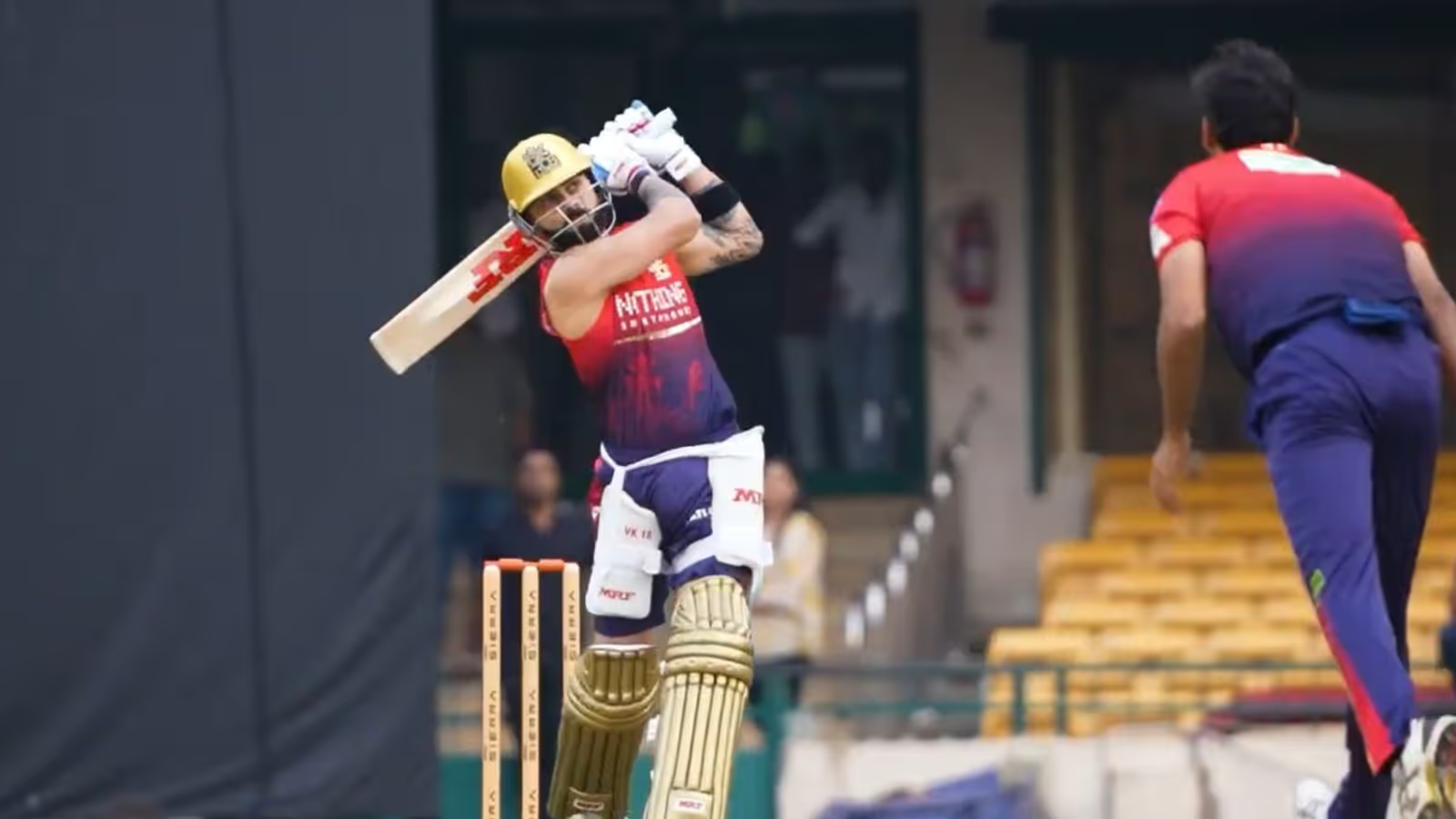
Why BCCI Banned Match-Day Practice in IPL
This is where things get interesting.
From an outsider’s view, banning practice might feel restrictive. But from a management perspective, it solves multiple long-standing issues:
1. Pitch Preservation
Repeated match-day practice damages the main square, especially in high-pressure games. This move helps maintain pitch quality and consistency.
2. Fair Competition
Teams earlier had varying access to facilities. Now, the rule ensures equal conditions for both sides.
3. Broadcast & Sponsorship Control
Restrictions like avoiding LED boards and controlling player movement are clearly aligned with broadcast aesthetics and sponsor visibility.
4. Operational Discipline
The IPL is no longer just cricket — it’s a billion-dollar production. These rules push teams toward professional, standardised behaviour.
How This Impacts Players and Teams (Real Scenario)
If you’ve watched IPL closely, you’ve probably seen players:
- Taking last-minute throwdowns
- Testing pitch bounce hours before the game
- Fixing technical flaws just before toss
That’s gone now.
Real impact:
- Young players lose confidence buffer: Nets before the game often calm nerves
- Injured players lose flexibility: No last-minute fitness checks on main square
- Captains lose tactical edge: No real-time pitch adaptation
This means teams must now prepare a day earlier — no second chances.
And honestly, this could separate well-planned teams from reactive ones.
Other Important IPL 2026 Rules You Should Know
The practice ban is just one piece. The full guideline update includes several strict rules:
Practice & Travel Rules
- Only accredited staff allowed during practice
- Families must travel separately
- Teams must use official team buses
Match-Day Rules
- Accreditation mandatory (fines for violations)
- Max 12 support staff allowed
- Players must follow broadcast rules (caps, dress code)
- No sitting in front of LED boards
Jersey Rule
- Any jersey number change must be informed 24 hours in advance
These might seem minor, but together they create a highly controlled professional environment.
Expert Analysis & What This Means Going Forward
Here’s the blunt truth — this isn’t just about discipline. This is about control, consistency, and commercial optimisation.
From an expert standpoint, three big shifts are coming:
1. IPL Becoming More Structured Than Ever
We’re moving from a “flexible league” to a system-driven tournament, similar to global sports leagues like the NFL.
2. Strategy Will Start Earlier
Teams can no longer rely on match-day adjustments. Expect:
- More data analysis
- Pre-match simulations
- Defined player roles
3. Pressure on New Players Will Increase
Without match-day nets, debutants and uncapped players may struggle more mentally.
Risk Factor
If over-regulated, IPL could lose some of its natural, player-driven spontaneity — something fans love.
But if balanced well, this could raise professionalism to a global benchmark level.
What Fans Are Missing (Unique Insight)
Most reports are focusing on the rule — but not the fan experience impact.
Here’s what changes for viewers:
- Better pitch quality = more consistent matches
- Cleaner visuals = improved broadcast experience
- More tactical gameplay = higher-quality cricket
So while players might feel restricted, fans could actually benefit from sharper, more competitive matches.
FAQ: BCCI IPL 2026 New Rules Explained
Can IPL teams practice on match day?
No, BCCI has officially banned all practice sessions on match days.
Why did BCCI introduce this rule?
To maintain pitch quality, ensure fairness, and standardise operations across teams.
Are fitness tests allowed on match day?
No, fitness tests on the main square are not permitted on match days.
How many support staff are allowed on match day?
Only 12 accredited support staff, including the team doctor.
Can teams share practice nets?
No, each team gets designated practice areas and cannot use the opponent’s wickets.
Conclusion: A Rule That Will Quietly Change IPL Dynamics
At first glance, the BCCI new IPL guidelines 2026 might look like a minor administrative update.
But dig deeper, and you’ll see this is a fundamental shift in how IPL teams operate.
Less flexibility. More planning. Higher discipline.
And in a league where margins are razor-thin, this one rule — no match-day practice — could quietly decide matches before the toss even happens.